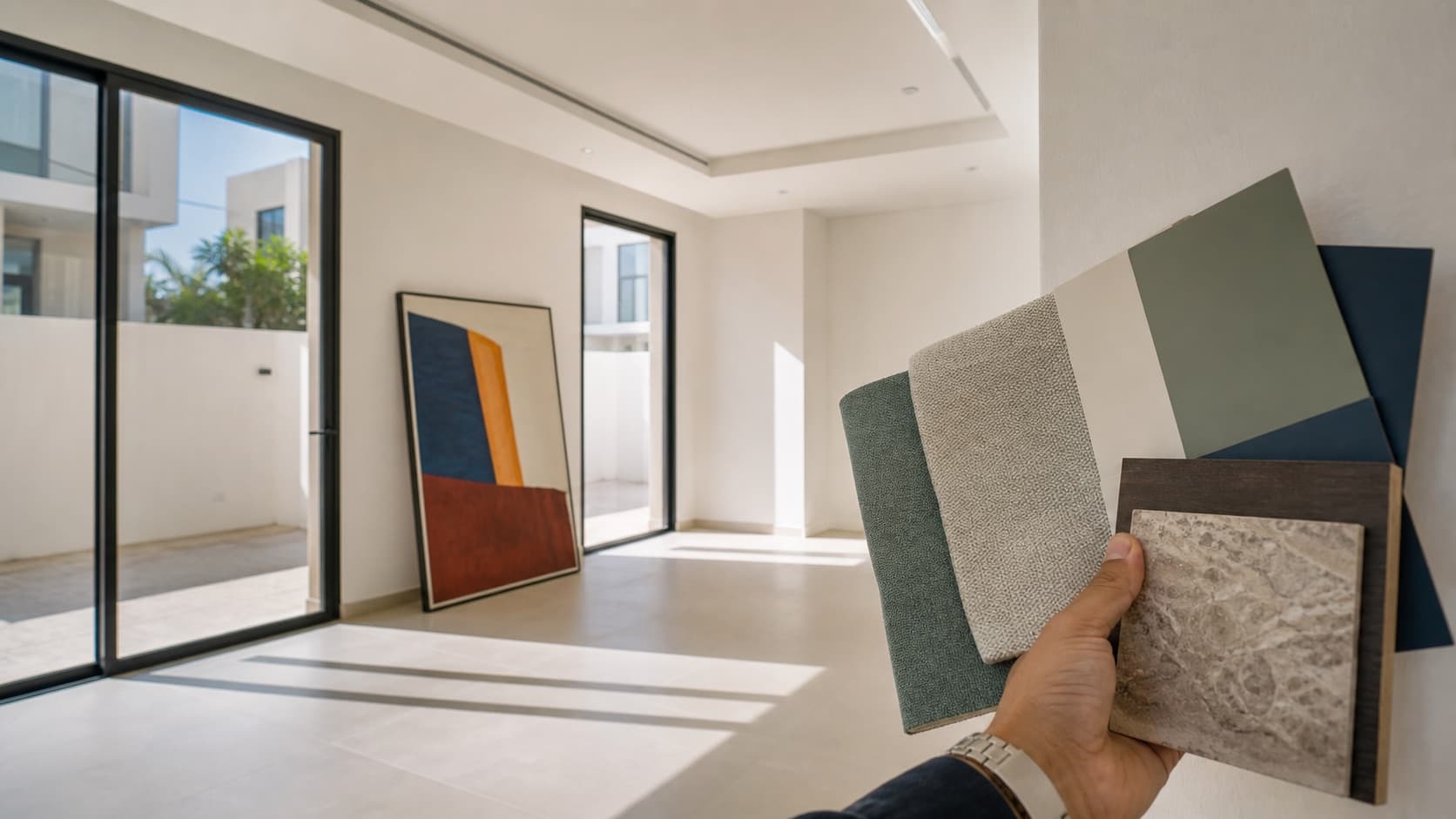
Here's the thing nobody tells you when you collect the keys: the home you just got is, give or take a paint colour, the same home everyone else on your street got. Off-plan handovers in Dubai come to a set spec. The developer picks one flooring, one kitchen, one wardrobe system, one shade of white, and rolls it out across every unit because that's how you build hundreds of homes on a schedule. It's sensible for them. It just means your villa starts life looking like a showroom version of itself, competent and a little anonymous.
The good news is that the gap between "standard handover" and "this home looks designed" is smaller than people assume, and most of it isn't structural. You don't need to knock down walls or import marble to get there. You need to know which handful of changes actually move the needle, and which expensive-looking moves are mostly a waste. That's what this is about.
First, know exactly what you were handed
Before you change anything, get clear on exactly what you were handed. Off-plan homes in Dubai arrive with a builder finish: basic flooring is down, a developer kitchen is installed, built-in wardrobes are fitted, the walls are painted white, and the bathrooms have standard sanitary ware. What they don't include is anything that makes the place feel like yours, no curtains, no proper lighting, no furniture, none of the soft layer.
Your exact spec is written in your brochure and your sale agreement, so read those for the detail. This matters for budget, because your kitchen and wardrobes are already in, which means replacing them is a choice rather than a necessity. You might get far more out of that money elsewhere.
One more practical note specific to Dubai. If you want to touch anything structural, move a wall, change the kitchen layout, alter the facade, you'll need a No Objection Certificate from your master developer (Emaar, Nakheel, and the rest each have their own process) and then a Dubai Municipality permit on top. It's doable and normal, but it adds time and paperwork, which is one more reason the best early wins are the ones that don't require it.
The changes that do the most work
If you only have the budget or appetite for a few moves, make them these. They punch above their cost.
Lighting, before almost anything else. The single biggest reason a standard home looks standard is the lighting. Developers fit functional, even, slightly flat ceiling lights and call it done. Swap that for layered lighting (some on the ceiling, some at eye level, some low and warm) and the same room reads completely differently at night. You don't need to re-wire everything. Adding floor and table lamps, putting key lights on dimmers, and changing cold white bulbs for a warmer tone costs little and changes the whole mood. Of everything on this list, lighting gives you the most for the least.
Paint, but with intent. That developer white is fine. It's also the most obvious tell that nobody has touched the place. You don't have to go bold. Even shifting to a warmer, softer off-white across the home, then taking one or two rooms somewhere with a bit more depth, makes the space feel chosen rather than defaulted. Paint is cheap. The labour to do it well across a villa is the real cost, but it's still one of the highest-return changes you can make.
Window treatments. No developer in Dubai hands a home over with curtains, so until you add them, bare windows keep the place looking temporary no matter what else you do. Floor-to-ceiling curtains, hung high and wide so they frame the window rather than sit inside it, instantly add a sense of height and finish. This is a place worth spending a little, because it touches every room and you see it constantly.
Define your zones. Dubai villas love a big open-plan ground floor, which is great until it feels like one large undifferentiated space. You can carve it into a living area, a dining area, and a sitting nook without building anything, using rugs to anchor each zone, lighting to mark them, and furniture placement to suggest the edges. A good rug under the right furniture does more to make a room feel intentional than most people expect.
Where to spend if you go further
If you've got more room in the budget, this is the order I'd prioritise.
The kitchen and the joinery are where a home stops looking furnished and starts looking designed. If your handover kitchen is basic, you don't always need to rip it out. Sometimes new fronts, better handles, and a different countertop change the whole feel for a fraction of a full replacement. The same logic applies to wardrobes: a builder-standard wardrobe in a better finish, or with the doors changed, can look custom without being rebuilt.
Flooring is the big one, and the most disruptive. If your handover flooring genuinely lets the home down, changing it transforms everything above it. But it's expensive and messy, so be honest about whether it's actually the problem or whether better rugs and lighting would get you most of the way for far less.
A feature wall, done properly, earns its place. Not an accent colour, but something with texture: panelling, a slatted timber wall, polished plaster, a fitted media unit. One well-chosen feature in the room you use most does more than spreading small touches everywhere.
The mistakes that keep a home looking ordinary
A few honest ones, because they're common.
Buying everything from one place in one go. A home that arrives as a single matching set looks like a catalogue, not a home with a point of view. Mixing pieces, even across mid-market stores, reads as more considered than a uniform suite.
Furniture that's the wrong size for the room. Dubai villas are large, and small furniture floating in a big space is one of the most common reasons a home feels unfinished. Bigger rooms usually need bigger, fewer pieces, not more small ones.
Skipping the soft layer. Hard surfaces everywhere, tile, glass, gloss, look cold and echo. Rugs, curtains, cushions, and a bit of texture are what make a room feel warm and expensive. People underspend here and wonder why the home feels like a lobby.
Treating the walls as an afterthought. Bare walls months after moving in are the clearest sign a home isn't done. Art, mirrors, and considered shelving finish a room more than another piece of furniture would.
How a designer changes this, and where Ritzy fits
You can absolutely do a lot of this yourself, and plenty of homeowners do. What a designer brings is the editing and the sequencing: knowing that lighting and curtains should come before a new kitchen, that the rug is doing more work than the sofa, that the room needs two big things rather than six small ones. That judgement is most of the value, and it's what stops you spending money in the wrong order.
Ritzy designs full villas and townhouses across Dubai, and the part worth knowing up front is the commercial side: one price and one finish date, both agreed in writing before any work begins. For a home you're trying to plan carefully, knowing the number won't drift halfway through matters as much as the design itself.
If you want to see how the studio thinks before committing to anything, the Ritzy Studio app turns a single room into an AI-assisted design concept for a small fee, which is a low-pressure way to test the idea on your own space. You can see the studio's approach on the process page and browse design concepts on the work page. Those visuals are 3D design concepts rather than photographs of finished homes, so you're seeing the direction and the intent.
Where to start
If you've just taken handover and you're standing in a white-walled villa wondering where to begin, the most useful first step is a short conversation with someone who does this for a living. Ritzy offers a free 30-minute consultation with a member of our creative team, where you can walk through your home, your priorities, and a sensible order of attack. You'll leave with a clearer plan whether or not you go further. Book it on the contact page, and if you want to see which communities the studio works across, including Dubai Hills Estate and Tilal Al Ghaf, that's a good place to start.
FAQ
Do off-plan homes in Dubai come furnished? No. They hand over unfurnished with a builder finish: basic flooring, a developer kitchen, built-in wardrobes, white walls, and standard bathrooms. They don't include curtains, proper lighting, or furniture. Your exact specification is set out in your sale agreement and brochure, so check those for what's actually included.
What's the cheapest way to make a developer home look better? Lighting and paint, in that order. Swapping flat developer lighting for warm, layered lighting on dimmers and adding lamps changes a room more than almost anything else for the money. A considered repaint away from builder white is the next best return. Both cost far less than new flooring or a new kitchen.
Do I need permission to renovate my off-plan villa in Dubai? For anything structural, yes. You'll need a No Objection Certificate from your master developer and a Dubai Municipality permit before structural work begins. Cosmetic changes like paint, lighting, curtains, and furniture don't require this, which is one reason they're the best place to start.
Should I replace the builder kitchen and wardrobes? Not always. If they're sound, you can often change the look with new fronts, handles, and countertops for far less than a full replacement. Replace them outright only if the layout genuinely doesn't work for how you live, since that may also trigger permit requirements.
Can a standard home really look high-end without a huge budget? Yes, because the "designed" look comes mostly from lighting, layout, proportion, and how pieces are combined, rather than from the price of any single item. The skill is in directing a sensible budget at the things that carry the room, which is exactly what a good designer is for.