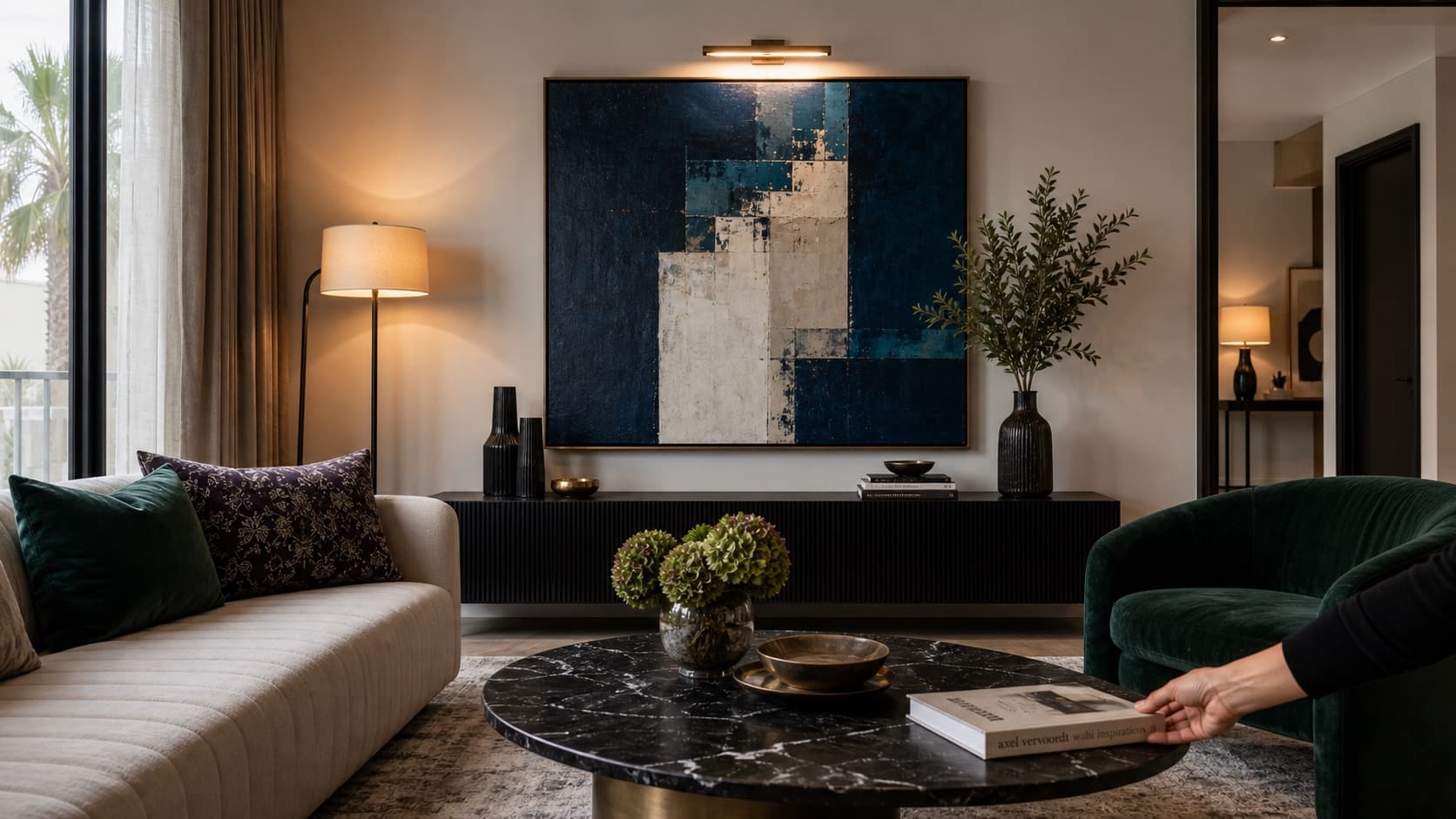
You've probably walked into a room before and felt, instantly, that it was expensive, then looked around and couldn't quite say why. No single object jumped out. It just read as considered, calm, finished. And here's the part that's genuinely useful: that feeling almost never comes from how much the furniture cost. You can fill a room with pricey pieces and have it feel cluttered and cold, or furnish it carefully from mid-market stores and have it feel like a magazine. The difference is a handful of decisions, and once you know them you can apply them at almost any budget.
These are the five that do the most work, roughly in the order they matter.
1. Lighting that isn't coming from the ceiling
This is the big one, and it's the one most people get wrong. A single bright light in the middle of the ceiling flattens everything beneath it and makes even a beautiful room feel like an office. Expensive-feeling rooms are lit in layers: a bit from above, a lamp or two at eye level, something low and warm in a corner. The light is softer, warmer, and comes from several points rather than one.
You don't need an electrician for most of this. A couple of floor and table lamps, warm-toned bulbs instead of cold white ones, and the main lights on a dimmer will change how the room feels at night more than a new sofa would. If you change one thing on this list, change this.
2. Restraint, not more stuff
The instinct when a room feels unfinished is to add. More cushions, more side tables, more decorative objects. It almost always makes things worse. Rooms that feel expensive tend to have fewer things, with space around them, so each piece gets room to breathe.
Think of it this way: one large, good-looking piece of art reads as far more confident than a wall of small frames. One generous sofa beats two cramped ones. A clear surface with a single beautiful object on it looks intentional, while the same surface covered in five things looks like a drop zone. Editing is free, and it's one of the most powerful tools you have.
3. The soft layer
Walk into a room that's all hard surfaces, tile floor, glass table, glossy units, and it feels cold and echoey no matter how nice the pieces are. The rooms that feel warm and expensive have a soft layer running through them: a proper rug, full curtains, textured cushions, maybe a throw, a bit of fabric on the walls or a softer surface somewhere.
Texture is what your eye reads as quality. A linen weave, a wool rug, a boucle chair, a timber surface. None of it has to be expensive, but the mix of textures is what stops a room looking flat. This is also where Dubai homes most often fall short, because the hard, easy-clean surfaces that suit the climate can leave a room feeling like a hotel lobby until you add the softness back.
4. Things at the right scale
Dubai living rooms are big. One of the most common reasons a room feels cheap or unfinished is furniture that's too small for the space: a modest sofa stranded in the middle of a large floor, a coffee table that looks lost, a rug that's too small so the furniture sits half on, half off it.
Bigger rooms usually want bigger, fewer pieces. A larger sofa, a rug big enough that the front legs of the furniture sit on it, a coffee table with real presence. Getting the scale right is the kind of thing you don't consciously notice when it's correct, and can't stop noticing once it's wrong. It costs nothing extra to choose the right size. It just takes knowing to.
5. A reason your eye stops somewhere
Expensive-feeling rooms usually have a focal point, one thing the room is arranged around. It might be a fireplace, a piece of art, a striking light fitting, a feature wall with some texture to it like panelling or polished plaster. The furniture then relates to that point rather than floating aimlessly.
Without a focal point, a room feels like a collection of objects that happen to share a floor. With one, everything reads as deliberate. You don't need to build anything dramatic. Often it's as simple as committing to one wall, putting something worth looking at on it, and arranging the seating to face it.
The thread running through all five
Notice what's missing from that list: a big budget. None of these five are about spending more. They're about lighting better, buying less, adding texture, getting the scale right, and giving the eye somewhere to land. That's mostly judgement, not money, which is exactly why two people with the same budget can end up with rooms that feel a world apart.
That judgement is most of what a good designer actually sells. Not access to expensive furniture, but the eye that knows the rug is too small, the lighting is too cold, and the room needs one big thing rather than five small ones. On a careful budget that eye is worth more, not less, because every choice has to count.
If you'd like a hand
Ritzy designs full villas and townhouses across Dubai, with one price and one finish date agreed in writing before any work starts, so the plan you sign off on is the plan you get. If you want to test the idea on a single room first, the Ritzy Studio app turns one space into an AI-assisted design concept for a small fee. You can see the studio's approach on the process page and browse design concepts on the work page, which are 3D design concepts rather than photos of finished homes.
If you'd rather just talk it through, Ritzy offers a free 30-minute consultation with a member of our creative team. Book it on the contact page, or see which communities the studio works across to get a feel for the kind of homes it designs.
FAQ
What's the number one thing that makes a living room look expensive? Lighting. Layered, warm lighting from several points in the room, rather than one bright ceiling light, changes how a space feels more than any single piece of furniture. It's also one of the cheapest things to fix.
Can a living room look expensive on a small budget? Yes. The expensive feeling comes from lighting, restraint, texture, scale, and a clear focal point, none of which depend on costly furniture. A carefully chosen mid-market room routinely looks better than an expensive one that ignores these basics.
Why does my living room feel cold even though I like the furniture? Usually a missing soft layer. Rooms with hard surfaces everywhere, tile, glass, gloss, feel cold and echoey. Adding a proper rug, full curtains, and textured cushions warms the space up immediately. This is especially common in Dubai homes built around easy-clean surfaces.
My furniture looks lost in the room. What's wrong? Almost certainly scale. Dubai living rooms are large, and small furniture floating in a big space looks unfinished. Larger, fewer pieces and a rug big enough to anchor the seating area will fix it faster than adding more items.
Do I need a designer to get this right? No, but a designer mainly sells the judgement behind these decisions: knowing what's too small, too cold, or too cluttered, and in what order to fix it. That eye is worth most on a careful budget, where every choice has to earn its place.